

Few dental treatments carry as much worry as the words “root canal.” For years, the procedure has been portrayed as painful, complicated, or even unnecessary. In reality, modern root canals are safe, effective, and—most importantly—pain-relieving.
If you’ve been told you may need a root canal, don’t panic. Here’s everything you need to know about why they’re performed, what the process looks like, and how they can protect your smile for years to come.
What Exactly Is a Root Canal?
A root canal is a restorative dental treatment that saves teeth damaged by deep decay, trauma, or infection. Each tooth has an inner layer called pulp, made up of nerves and blood vessels. When bacteria reach this soft tissue, it can cause intense pain and swelling.
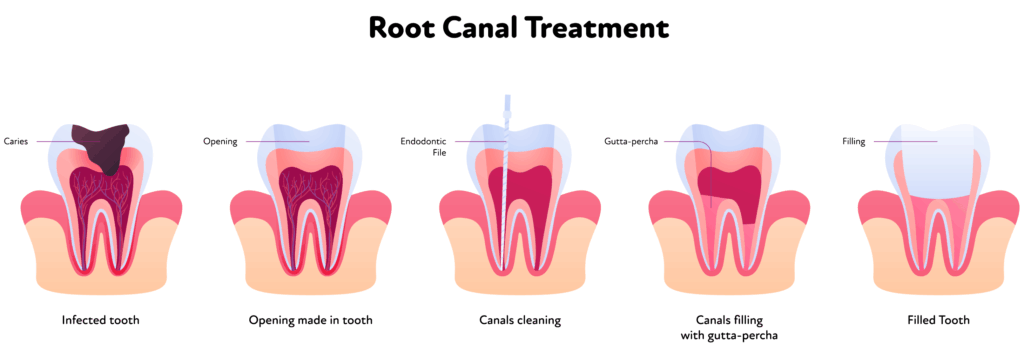
Instead of extracting the tooth, a root canal cleans out the infection inside, fills the canal with a safe material, and seals the tooth. Finally, the tooth is usually capped with a crown for strength and durability. This means you get to keep your natural tooth while eliminating the source of pain.
Do You Need a Root Canal? Signs to Watch For
Not all toothaches mean you’ll need a root canal, but there are certain red flags:
- Severe or lingering tooth pain, especially when chewing.
- Prolonged sensitivity to hot or cold foods.
- Swollen or tender gums.
- A tooth that looks darker than surrounding teeth.
- A recurring bump or abscess on the gums.
If you notice one or more of these symptoms, schedule a dental exam right away. Acting early can prevent infection from spreading and give you the best chance of saving your tooth.
The Root Canal Process in Simple Terms
Thanks to modern dentistry, root canals are more efficient than ever. Here’s what happens:
- Diagnosis & Imaging – X-rays help pinpoint the infection.
- Local Numbing – The tooth and surrounding area are fully anesthetized.
- Cleaning – The dentist removes infected pulp through a small opening.
- Filling & Sealing – The canal is filled with gutta-percha and sealed tightly.
- Final Restoration – A crown or filling is placed to protect the tooth.
Most root canals can be completed in one or two appointments, with little downtime afterward.
Root Canal Myths—Busted
- Myth: Root canals are painful.
Truth: They actually relieve pain, and anesthesia makes the process comfortable. - Myth: It’s better to just pull the tooth.
Truth: Saving your natural tooth is almost always healthier and more cost-effective long term. - Myth: Root canals cause illness.
Truth: This is a century-old myth that’s been thoroughly debunked. - Myth: They take weeks of appointments.
Truth: Many root canals are finished in a single visit.
What Recovery Looks Like
After treatment, mild soreness for a day or two is normal, but it usually resolves quickly. Most patients go back to work or daily routines the next day. Your dentist may recommend avoiding hard chewing on that tooth until your permanent crown is placed.
With proper oral hygiene and regular checkups, a root canal-treated tooth can last a lifetime.
Why Root Canals Matter
The biggest benefit of a root canal is simple: you get to keep your natural tooth. It also:
- Restores full function and chewing.
- Protects surrounding teeth from shifting.
- Prevents more costly procedures later.
The Takeaway
Root canals aren’t something to dread—they’re something to appreciate. They end pain, stop infection, and let you keep your natural smile.
If you’ve been experiencing tooth pain or sensitivity, call your dentist for an evaluation. You may find that a root canal is the fastest path back to comfort and confidence.
