
A gap between the front teeth means something very different at age seven than it does at forty-five. In a child, it’s often a sign that things are going exactly as they should. In an adult who never had one before, it can be the first visible clue that something underneath has changed.
That’s why “should I do something about this gap?” doesn’t have one answer. It depends on who has the gap, how long it’s been there, and why it formed. Here’s how spacing tends to show up across a lifetime, what it usually means at each stage, and the options our Buffalo Grove patients have when they decide they’d like it closed.
Early Childhood: Gaps Are Often a Good Sign
Parents are sometimes surprised to hear that spacing between baby teeth is welcome. Baby teeth are much smaller than the permanent teeth that replace them. When a young child has small spaces between the front teeth, it usually means the jaw has room for the larger adult teeth on their way.
A tightly packed row of baby teeth with no spaces at all can actually be the bigger signal. It sometimes hints that permanent teeth will be crowded when they arrive. Either way, spacing at this age isn’t something to treat. It’s something to watch at regular checkups.
The Mixed-Teeth Years: The “Ugly Duckling” Stage
Somewhere around ages 7 to 10, many kids develop a noticeable gap between the two upper front teeth. It can look alarming in school photos. In most cases, it’s a normal, temporary phase that dentists sometimes call the ugly duckling stage.
What’s happening is that the permanent canines are still developing higher up in the jaw. They press on the roots of the front teeth and fan them outward. As the canines come in, usually around ages 11 to 13, they tend to push the front teeth back together, and the gap narrows or closes on its own.
A few things can keep a gap open past this stage: a missing or extra tooth, a thick band of tissue connecting the upper lip to the gum (called a frenum), or habits like thumb sucking that continued longer than usual. If the space hasn’t started closing once the canines are in, that’s a good time to have it evaluated.
Teens and Young Adults: When the Gap Stays
By the late teens, most permanent teeth are in place, and a gap that’s still there is likely to stay. For many people, the cause is simply proportion. The teeth are a little small for the jaw, or one tooth, often an upper lateral incisor, is narrower or more peg-shaped than its neighbor.
Plenty of people like their gap and keep it. It can be a distinctive feature, and there’s no health reason to close a stable space between otherwise healthy teeth. For those who’d rather close it, this is often the easiest stage to do so, since the teeth and gums are healthy and there’s usually no underlying problem to address first.
Adults: New Gaps Deserve a Closer Look
A gap you’ve had since childhood is one thing. A gap that appears in your thirties, forties, or later is different, and it shouldn’t be ignored.
Teeth don’t usually drift apart without a reason. Some of the more common ones:
- Gum disease. As periodontal disease breaks down the bone and tissue that hold teeth in place, teeth can loosen and fan outward. New spacing between the upper front teeth is a classic sign.
- A missing tooth. When a tooth is lost and not replaced, neighboring teeth tend to tip and drift into the space, opening gaps elsewhere.
- Tongue thrust. Some people press their tongue against the front teeth when they swallow. Thousands of swallows a day add up to steady pressure.
- Bite changes. Wear, grinding, or gradual shifting can change how the upper and lower teeth meet, pushing some teeth forward.
For this reason, we don’t recommend jumping straight to cosmetic treatment for a gap that’s recently appeared. If gum disease is driving it, closing the space without treating the cause means it can simply reopen. Healthy gums come first.
Later Years: Protecting What’s Already There
With age, gums can recede, and small triangular spaces can form near the gum line between teeth. These aren’t gaps in the traditional sense, but they catch food and can bother people cosmetically. Daily cleaning between the teeth matters more at this stage, since those spaces make it easier for plaque to collect.
Older adults can still close gaps. The same options apply, with a little more attention paid to gum health, existing restorations, and bite.
How Gaps Get Closed at Our Buffalo Grove Office
Once the cause is understood and the gums are healthy, there are three main ways to close spacing. The right one depends on how big the gap is, how many teeth are involved, and whether the teeth themselves are the shape and color you’d like.
Dental bonding is often the simplest route for a small gap. Tooth-colored composite resin is added to the sides of the teeth and sculpted to widen them slightly until the space closes. It usually takes a single visit and requires little or no removal of natural tooth structure. The tradeoff is that composite can stain and chip over time and may eventually need touch-ups.
Porcelain veneers make sense when the gap is part of a bigger picture, such as teeth that are also discolored, worn, or uneven in shape. Veneers reshape the front of the teeth entirely, so the gap closes as part of a broader change. They’re more durable and stain resistant than bonding but involve removing a thin layer of enamel.
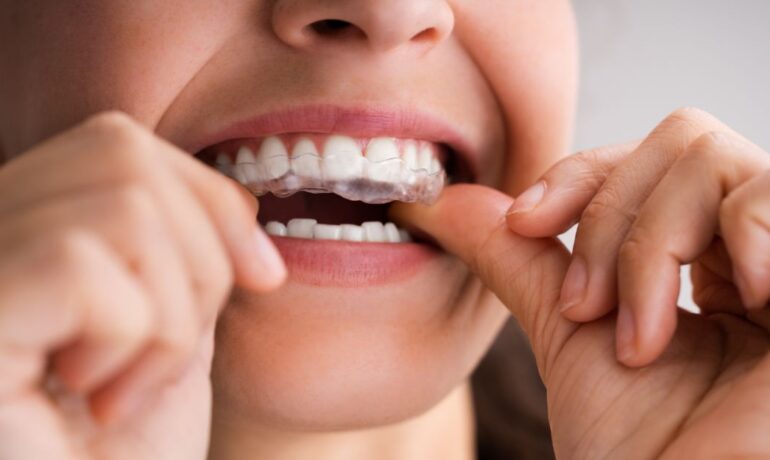
Invisalign moves the teeth themselves rather than adding material to them. It’s often the better choice when there are several gaps, when spacing is tied to how the teeth are positioned, or when the teeth are already a nice size and shape and you’d simply like them closer together. After treatment, a retainer keeps the spaces from reopening.
Sometimes the best result combines approaches. A patient might use Invisalign to bring the teeth closer and then add a little bonding to even out a narrow tooth.
Deciding What’s Right for You
If your gap has been with you since childhood and you’re happy with it, there’s no need to change a thing. If it bothers you, or if it’s new, it’s a good reason to come in. The team at Creekside Dental in Buffalo Grove can look at what’s causing the spacing, check your gum health, and talk through which option fits your teeth and the result you have in mind.
