
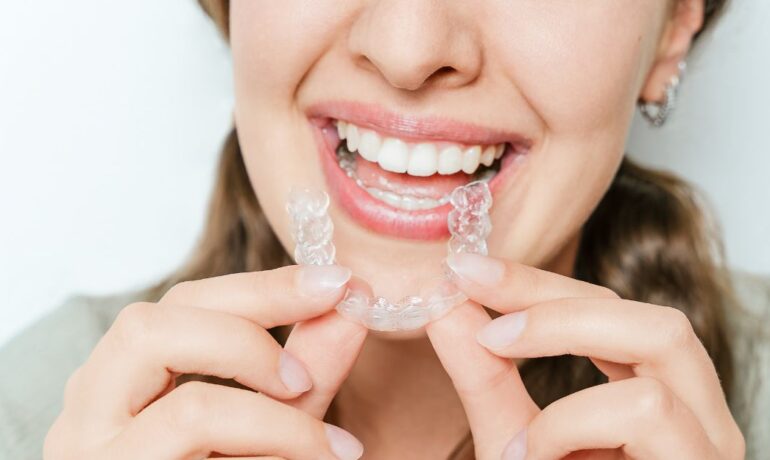
Not every smile that could be straighter needs brackets and wires. For a lot of adults and teens, clear aligners can move teeth quietly, with trays most people won’t notice in conversation. Still, Invisalign isn’t the right tool for every case, and the best results start with an honest look at whether your teeth, your bite, and your daily routine line up with how it works.
This checklist from Creekside Dental in Buffalo Grove walks through the signs that usually point toward Invisalign, plus a few that suggest a different path. If several of the first group sound familiar, you’re probably a good candidate. If something from the second group fits, that’s useful to know before you start.
How Invisalign Moves Teeth
Invisalign uses a series of clear, custom-made trays. Each one is shaped slightly differently from the last, so it applies gentle, steady pressure that guides your teeth a small step at a time. You switch to a new set on a regular schedule, and over the course of treatment those small steps add up.
Many plans also use small tooth-colored bumps called attachments. They’re bonded to certain teeth and give the trays something to grip, which helps with movements that are harder to achieve with plastic alone. They come off at the end of treatment.
With that in mind, here’s what tends to make someone a strong fit.
Your Teeth Overlap or Feel Crowded
Mild to moderate crowding is one of the most common reasons people come in asking about Invisalign. Maybe a front tooth sits a little behind its neighbors, or floss shreds every time you work it between two particular teeth.
Crowding isn’t only a cosmetic issue. Overlapping teeth create tight corners where plaque collects and a toothbrush can’t quite reach. Straightening them often makes daily cleaning easier, which helps your gums and lowers the chance of cavities between teeth.
You Have Gaps You’d Like Closed
Spaces between teeth, especially up front, respond well to aligners in many cases. Invisalign can gradually bring teeth together so the gaps close and food stops catching in them.
The cause of the gap matters, though. A space left by a missing tooth or one caused by gum changes calls for a different conversation. Part of your evaluation is figuring out why the gap is there, not just how to close it.
Your Teeth Have Shifted Since You Had Braces
This one is incredibly common. Someone wore braces as a teenager, stopped wearing their retainer somewhere along the way, and now notices their lower front teeth starting to crowd again.
That kind of relapse is often a good match for Invisalign, because the movements needed are usually modest. Plenty of adults use it to get back the smile they already worked for, and then keep it with a retainer they actually wear this time.
Your Bite Is a Little Off
Invisalign can address many mild to moderate bite concerns, such as some overbites, underbites, and crossbites. You might notice your front teeth don’t meet the way they should, or that one side seems to do most of the chewing.
Bite problems vary a lot in how they’re built. Some come from tooth position, which aligners can often improve. Others involve how the jaws themselves line up, which is a different situation. An exam and digital scan help sort out which one you’re dealing with.
You Can Commit to Wearing Your Aligners
This may be the most important item on the list. Aligners only work when they’re in your mouth, and they’re designed to be worn most of the day and night, typically 20 to 22 hours. You take them out to eat and drink anything other than water, then brush and put them right back in.
People who thrive with Invisalign tend to treat it like a routine, not a chore. If you know you’ll leave trays in a drawer for a weekend, it’s better to be honest about that up front. Fixed braces do their work whether you remember them or not, and for some people that’s the better match.
You’d Rather Have Something Removable
Being able to take your aligners out is a real advantage. There’s no list of foods to avoid, since the trays come out at meals. Brushing and flossing work the same way they always have. And if you have a wedding, a presentation, or photos coming up, the trays are discreet enough that most people won’t notice them.
Signs Another Option Might Make More Sense
Invisalign is versatile, but it’s not the right tool for every situation. A different plan may serve you better if:
- Your concern is shape or color, not position. A chipped edge or a single uneven tooth might be better handled with bonding or veneers, with no tooth movement needed at all.
- Your case is complex. Severe rotations, large vertical movements, or bite problems rooted in jaw position may call for an orthodontic specialist.
- You have active gum disease or untreated cavities. Those need attention first, since moving teeth through unhealthy gums isn’t safe.
- Daily wear isn’t realistic for you right now. That’s not a failing. It just means a fixed option will likely give you a better result.
What an Invisalign Consultation in Buffalo Grove Looks Like
The first step is a conversation about what’s bothering you and what you’d like to change. From there, we’ll examine your teeth and gums, check your bite, and take a digital scan instead of messy impressions.
That scan lets you see a preview of how your teeth could move over the course of treatment, which makes it much easier to decide whether the result matches what you had in mind. If Invisalign is a good fit, we’ll explain the plan, how often you’ll change trays, and how check-ins will work along the way. If it isn’t, we’ll tell you why and talk through the options that make more sense.
Either way, you’ll leave with a clear answer instead of a guess.
Talk With Creekside Dental About Your Smile
If you’ve been wondering whether clear aligners could work for you, the easiest way to find out is to come in and ask. Creekside Dental is happy to look at your smile, answer your questions honestly, and help you decide whether Invisalign is the right next step. Reach out to schedule a consultation at our office in Buffalo Grove.
