
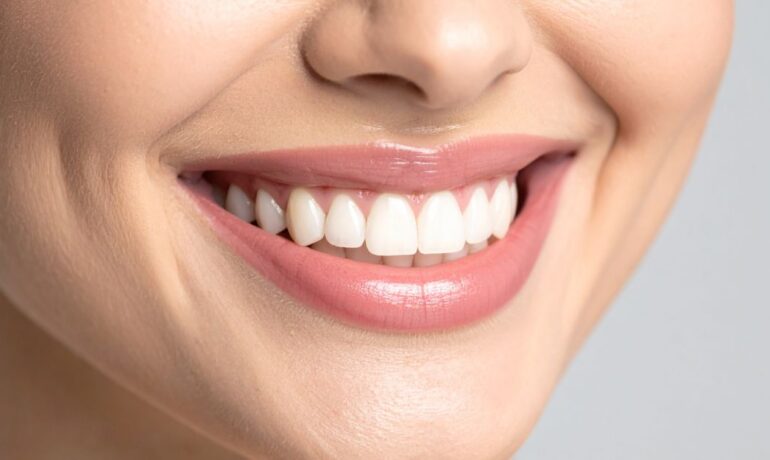
Walk down the oral care aisle at any store in Buffalo Grove and you’ll find a dozen products promising a brighter smile. Strips, pens, charcoal powders, trays with little blue lights, toothpastes with words like luminous printed across the box. They can’t all deliver the same thing, and most people work that out only after they’ve tried three or four of them and given up.
Whitening isn’t a single procedure. It’s a category, and the options inside it differ in strength, in how long they take, and in which kinds of discoloration they can actually move. Sorting out which is which ahead of time tends to save a lot of trial and error.
Not Every Kind of Discoloration Responds the Same Way
Before comparing methods, it helps to know what they’re acting on. Peroxide, the active ingredient in nearly every legitimate whitening product, works by breaking apart the pigment molecules that have settled into tooth structure. Where those pigments sit determines how well any given approach will do.
Surface discoloration builds up in the outer enamel over years of ordinary eating and drinking. It responds well to whitening, sometimes dramatically. Deeper discoloration lives inside the tooth and can come from an old injury, certain medications taken during childhood, or simply the natural thinning of enamel with age, which lets more of the yellower dentin underneath show through. That kind is stubborn. It may lighten some, but it rarely responds the way surface staining does.
Then there’s a third category that isn’t stain at all. If a tooth has a crown, a veneer, or a tooth-colored filling on the front surface, that material was color matched when it was placed and it doesn’t lighten. No product changes it.
A dentist can usually tell these apart in a few minutes of looking. Trying to tell them apart yourself, in a bathroom mirror, is where a lot of whitening frustration begins.
Whitening Toothpaste and Rinses
These are the mildest option available, and their reputation suffers because people expect them to do something they were never designed to do.
Most whitening toothpastes work mechanically rather than chemically. They contain gentle abrasives that polish away fresh surface film, plus sometimes a small amount of peroxide that sits on the tooth for the thirty or so seconds you’re brushing. That’s not long enough for meaningful color change. What they’re genuinely good at is maintenance. If you’ve already whitened your teeth through another method, a whitening toothpaste helps slow the gradual return of surface pigment.
One caution about the abrasive ones, particularly charcoal formulas. Used aggressively and daily, they can wear at enamel over time, and thinner enamel eventually looks more yellow rather than less. Gentler is better here.
Over-the-Counter Strips and Preloaded Trays
Strips are the most popular whitening product in the country, and for mild surface discoloration they do work. The peroxide concentration is low, so results build slowly over a couple of weeks, but they’re real.
Their limitation is fit. A strip is a flat piece of plastic laid against a curved arch of teeth that have their own particular alignment. Gel reaches the flat front surfaces well and reaches the spaces between and behind teeth poorly. If your teeth are crowded or rotated, you’ll often see a patchy result, with the prominent surfaces lightening while the recessed ones stay behind. The same issue creates the thin dark line some people notice near the gumline after a course of strips.
Preloaded one-size trays share this problem and add another. Gel that squeezes past the edges of a tray sits on gum tissue, which is where much of the irritation people report actually comes from.
Custom Take-Home Trays
This is the middle ground, and for a lot of patients it’s the practical answer.
The trays are made from impressions or a scan of your own teeth, so they hold gel against every surface evenly and keep it off the gums. The gel is stronger than what you can buy off a shelf, which means fewer applications for the same result. You wear them at home on your own schedule, usually daily for one to two weeks, and you keep the trays afterward for occasional touch-ups.
The tradeoff is time. Custom trays don’t produce an overnight change, and they require you to actually use them consistently. For people who want a specific result by a specific date, that consistency is the variable that matters most.
In-Office Whitening
In-office treatment uses a considerably stronger gel than anything you’d apply yourself, which is exactly why it’s done under supervision. Your gums are isolated and protected first, the gel is applied in timed rounds, and the whole appointment usually runs somewhere between an hour and ninety minutes.
The appeal is speed. You walk out with the change already visible rather than watching it accumulate over two weeks. That makes it the usual choice when there’s a wedding, a reunion, or a family photo on the calendar and limited runway before it.
Two things are worth knowing going in. Teeth are often slightly dehydrated right after treatment, which exaggerates how bright they look on that first day. The color settles back a shade or so as they rehydrate over the following day or two, and that settled shade is the true result. Many dentists also send patients home with custom trays afterward, since a single in-office session followed by periodic touch-ups holds better than either approach on its own.
What Whitening Won’t Fix
Being clear about the ceiling prevents most of the disappointment.
- Existing dental work. Crowns, veneers, bonding, and tooth-colored fillings hold whatever shade they were made in. If your natural teeth lighten around them, older restorations can start to look noticeably darker by comparison. When front teeth carry visible dental work, whitening usually needs to be planned around replacing or matching it.
- Gray discoloration from a past injury. A single tooth that darkened after trauma has a different cause entirely, and external whitening rarely touches it.
- Banding from childhood medication. Certain antibiotics taken while teeth were forming leave horizontal stripes deep in the structure. These respond poorly and sometimes look more obvious as the surrounding tooth lightens.
- Any decay or gum inflammation. Whitening gel on an untreated cavity or irritated tissue is a genuinely uncomfortable experience. Those get handled first.
About Sensitivity
Sensitivity during whitening is common, temporary, and largely manageable. Peroxide moves through enamel and briefly increases the responsiveness of the nerve inside the tooth, which shows up as short zings with cold air or cold drinks.
It resolves within a few days of finishing. If you’re prone to it, there are straightforward adjustments: shortening each session, spacing sessions further apart, using a desensitizing toothpaste for a couple of weeks beforehand, or switching to a formulation designed for sensitive teeth. People who’ve had a rough time with whitening in the past often assume they simply can’t do it, when what they actually needed was a slower protocol.
Choosing an Approach in Buffalo Grove
The right method depends on three things: what kind of discoloration you have, how much time you’re willing to give it, and whether there’s existing dental work in your smile zone.
Someone with even surface staining, no restorations up front, and no particular deadline can often get a satisfying result from strips. Someone with crowding, or a crown on a front tooth, or a date circled on the calendar is generally better served by a professional option, because the failure modes of the shelf products are precisely the ones their situation would trigger.
An exam settles it quickly. A dentist can identify which type of discoloration you’re dealing with, flag any restoration that will complicate the picture, and tell you honestly how much change is realistic for your teeth rather than for the teeth in the advertisement.
If your smile has been looking duller than you’d like and you’re tired of guessing at the drugstore, the team at Creekside Dental in Buffalo Grove is glad to take a look and talk through which approach makes sense for you. Bring the products you’ve already tried, since knowing what didn’t work is often the fastest route to finding what will.
